The moment before you used the item
Some of the most memorable equipment decisions happened while the character stood perfectly still. You opened the inventory, looked at an item you did not want to lose and hesitated. A small paper icon could hold an evening’s hope in a way its size did not suggest. That feeling makes talismans a useful meeting point between game mechanics and a much older vocabulary of wishes and protection.
The current official KalOnline guide separates ordinary strengthening talismans from prefix talismans and describes their use in enchanting equipment. It presents success and failure as part of the system. This establishes the game’s present terminology; it is not a claim that every current condition, penalty or success rate was identical on all servers in 2004–2007. [1]
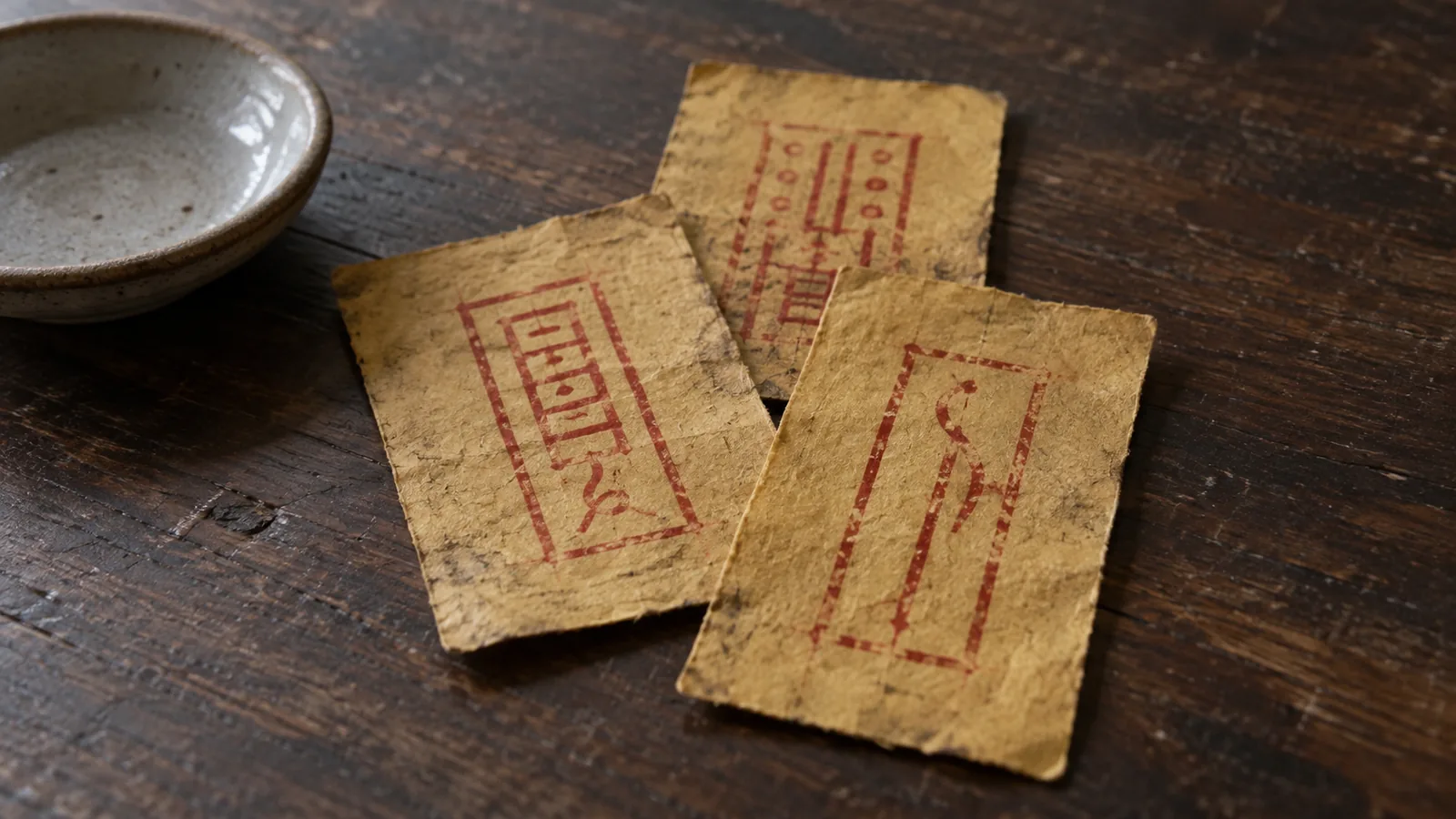
The images here begin with inventory design cues: small yellow-orange papers carrying red marks. They turn that compact visual idea into a tangible object. They are not photographs of talismans used by a historical Korean practitioner.
Bujeok belongs to a world of belief
The Korean term bujeok, 부적 / 符籍, refers to papers bearing writing, images or signs that are believed to drive away harmful influences or bring good fortune. Lee Bu-young’s Academy of Korean Studies entry distinguishes purposes that invite something desirable from those intended to ward off misfortune. The effects are reported as beliefs, rather than demonstrated powers. [2]
The same account describes the familiar combination of a yellow ground and red marks and discusses meanings attached to the colours. It also notes a varied history with influences from outside Korea. Bujeok should therefore be approached as a living and historically diverse religious-cultural practice, rather than a single universal symbol with one fixed origin. [2]
That distinction matters beside a game. A talisman’s attack bonus belongs to the designers’ rules. A person’s hope that a charm might protect a household belongs to a different kind of explanation. The two can be compared without translating either one into the other.
A museum object has its own date
A talisman record supplied by the National Folk Museum of Korea through Google Arts & Culture identifies a paper object by an unknown maker and dates it to the period since Korea’s liberation. That is a modern collection object. Its record offers something specific to inspect; it is not automatically an ancient specimen merely because talisman traditions have a long history. [3]
Collection records are useful precisely because they attach limits to an object: material, date range, maker if known, and the institution holding it. A newly generated close-up can show paper fibres beautifully, but it cannot supply any of those facts about a historical artefact.
Follow the collection link below to see the museum’s object on its own page. Our papers retain the look of game items and use imagined decorative marks. We do not claim they reproduce its inscription or have a ritual purpose.
The hand, the fold and the imagined pause
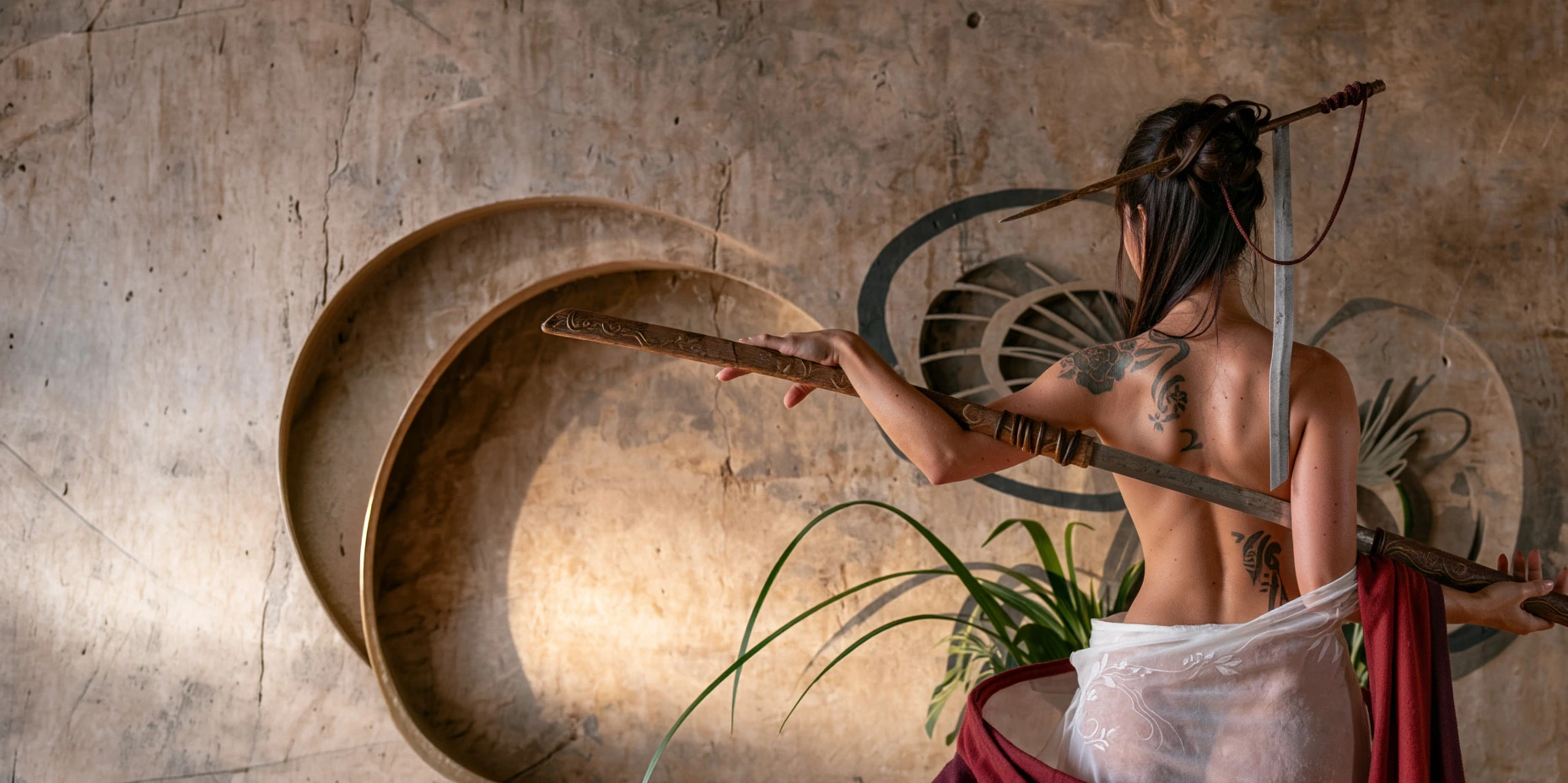
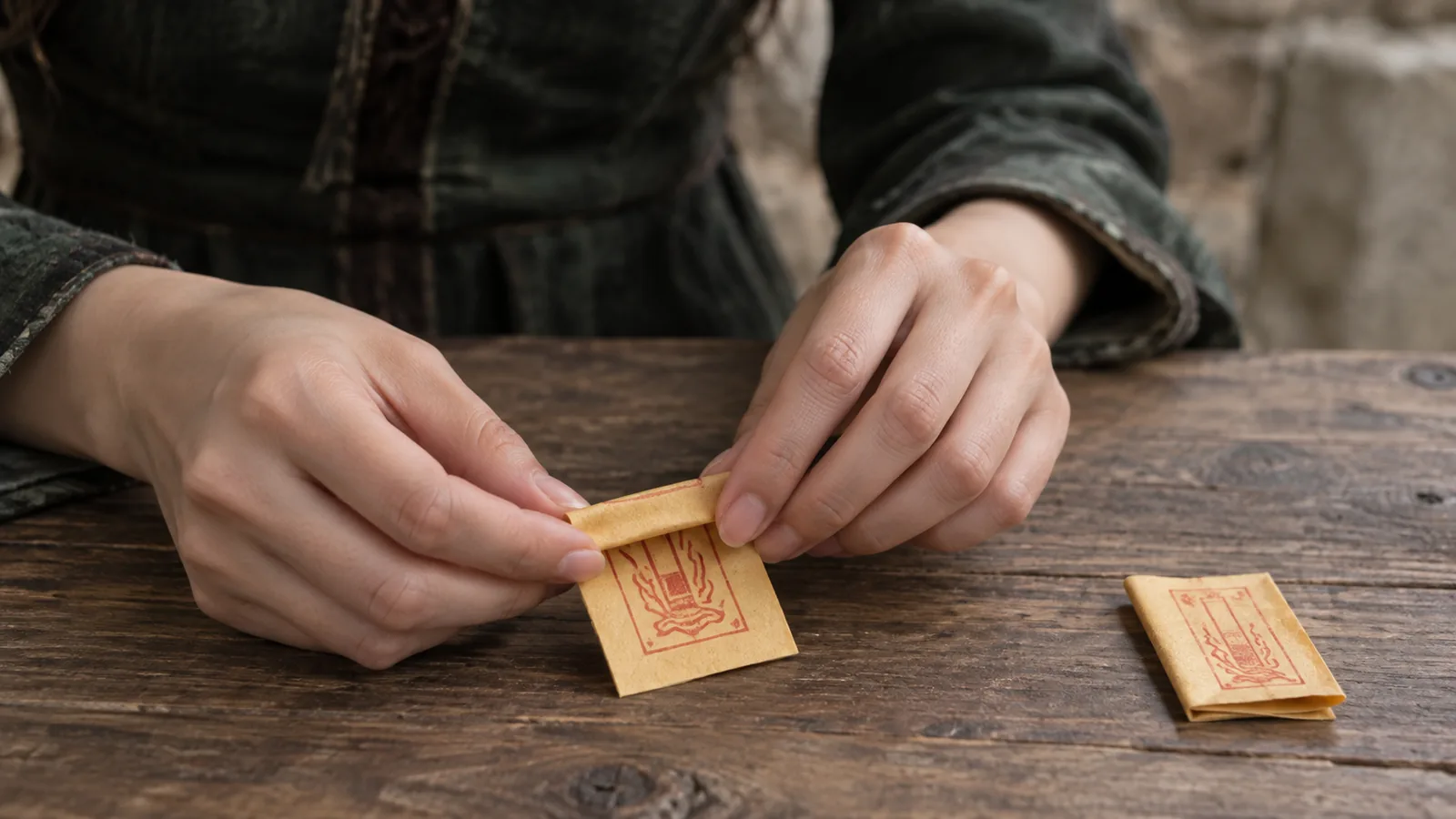
The folded-paper photograph is a study of scale. Hands make the little inventory rectangle feel like something that could fit in a pouch. The fold is an invented action for the image, not a lesson in an authenticated Korean ritual. The marks are likewise decorative interpretations of small visual cues, not a deciphered traditional formula.
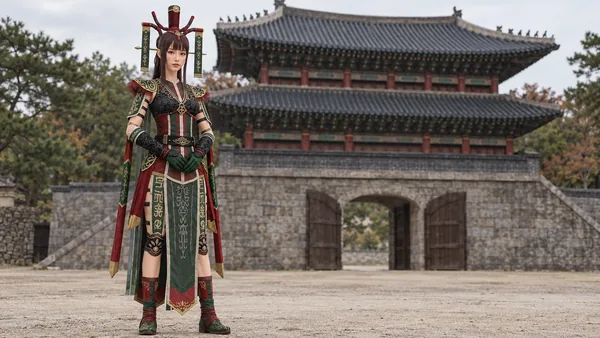
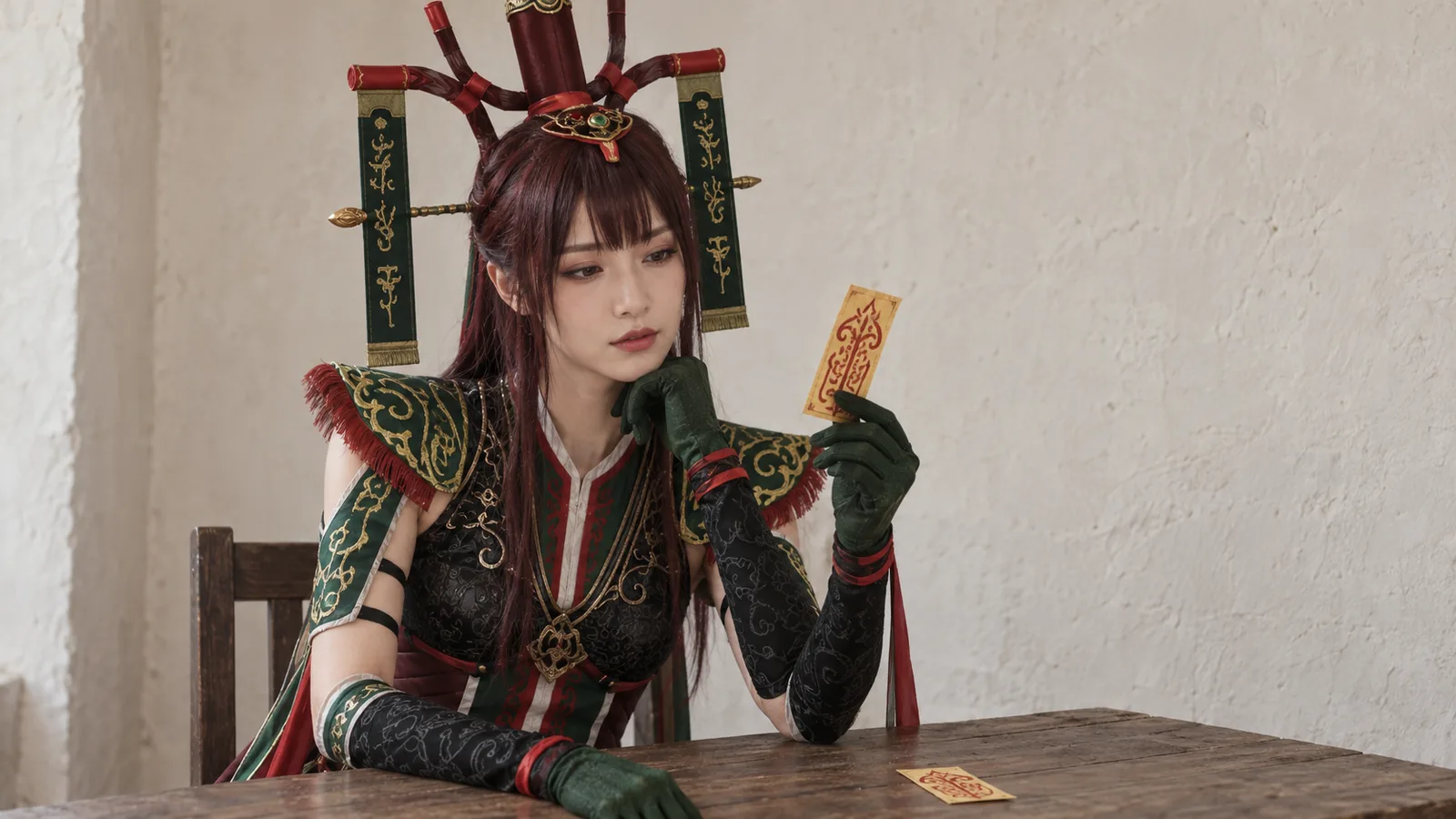
The Magician scene uses the familiar red-and-green MyungJoo DaeChangEau costume as a separate reference. She is examining a paper at an ordinary table. Her class title does not identify her as a representative of a particular real religious tradition, and her costume is not a historical ritual uniform.
A quiet scene can make the item more human without surrounding it with flames, floating crystals or a newly invented shrine. The pause before a choice already contains enough tension. It is the part of an inventory decision many returning players can recognise.
Luck in a game is still a rule
The official guide describes decreasing success probability as enchanting progresses and explains that failures can affect an item’s remaining durability. These are documented game rules in the guide consulted for this article. They should not be read as this server’s verified current configuration or as evidence of what every early player experienced. [1]
What survives in memory is often less precise than a table: someone’s advice, a lucky result, the item you decided to leave alone. We can collect those recollections without turning them into unsupported guarantees. A friend’s ritual before clicking may have been part of the evening’s humour; it is not statistical proof that the action improved the outcome.
If you share an enchanting story, add the approximate date and server, and distinguish a remembered result from an exact mechanic you can document. An old screenshot or period guide helps another player compare the account with the version they knew.
The wish behind the small rectangle
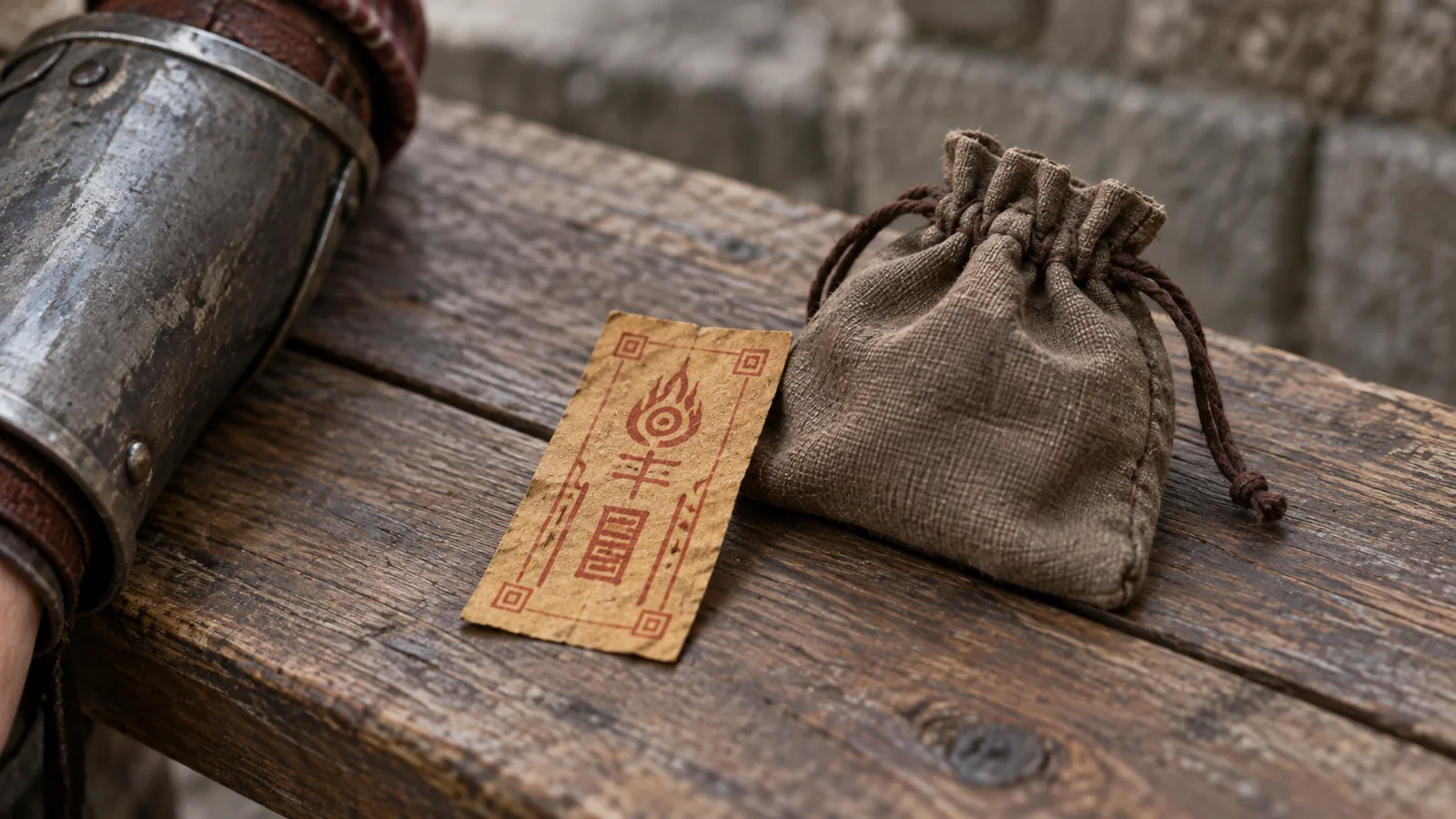
The final still life puts the paper beside a modest imagined repair pouch. It is an inventory-inspired arrangement, not an identification of a named game object or a traditional Korean ritual kit. The image belongs to the same world of practical preparation as the village visit and the equipment check.
Across the culture series, a familiar name or silhouette has repeatedly opened onto something beyond the game: a coat, a sword hilt, a horn bow or a landing place. Talismans add the human wish that the next uncertain thing might turn out well. That resemblance can be moving without requiring the game and the tradition to be the same.
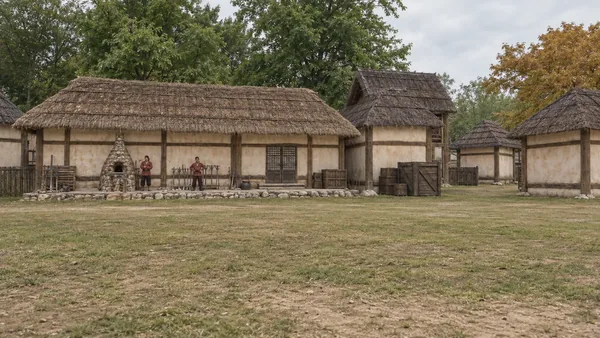
All four scenes are new AI-generated photographic interpretations. The cultural sources describe beliefs and objects; the official guide documents game terminology. Your memories can add a third kind of record, provided we keep clear who remembers what and when.
Sources & image credits
Research checked on 16 October 2026. Cultural scholarship, a dated player guide and current game records are identified separately. Photographic scenes are new AI interpretations of game references. Museum objects can be viewed through the collection links; their photographs are not reproduced here.
- Talisman: item enhancement · official KalOnline guideINIXSOFT / KalOnlineCurrent guide checked 16 October 2026. Mechanics are not represented as a verified configuration of Kal2006 or every 2004–2007 server.
- Bujeok (부적 / 符籍)Lee Bu-young · Encyclopedia of Korean Culture, Academy of Korean Studies · 2022-10-28Practices and effects are described as religious/folk beliefs, not claims of proven supernatural efficacy.
- Talisman, unknown maker · paper objectNational Folk Museum of Korea · Google Arts & Culture collection recordThe collection record dates this object to the period since Korea’s liberation. Museum imagery is linked, not reproduced or generated as evidence.
- Magician armour · official KalOnline guideINIXSOFT / KalOnlineCurrent names and grades checked 16 October 2026. Historical robe terminology is an editorial linguistic comparison, not a verified statement by the game’s designers.