The outline an Archer knows
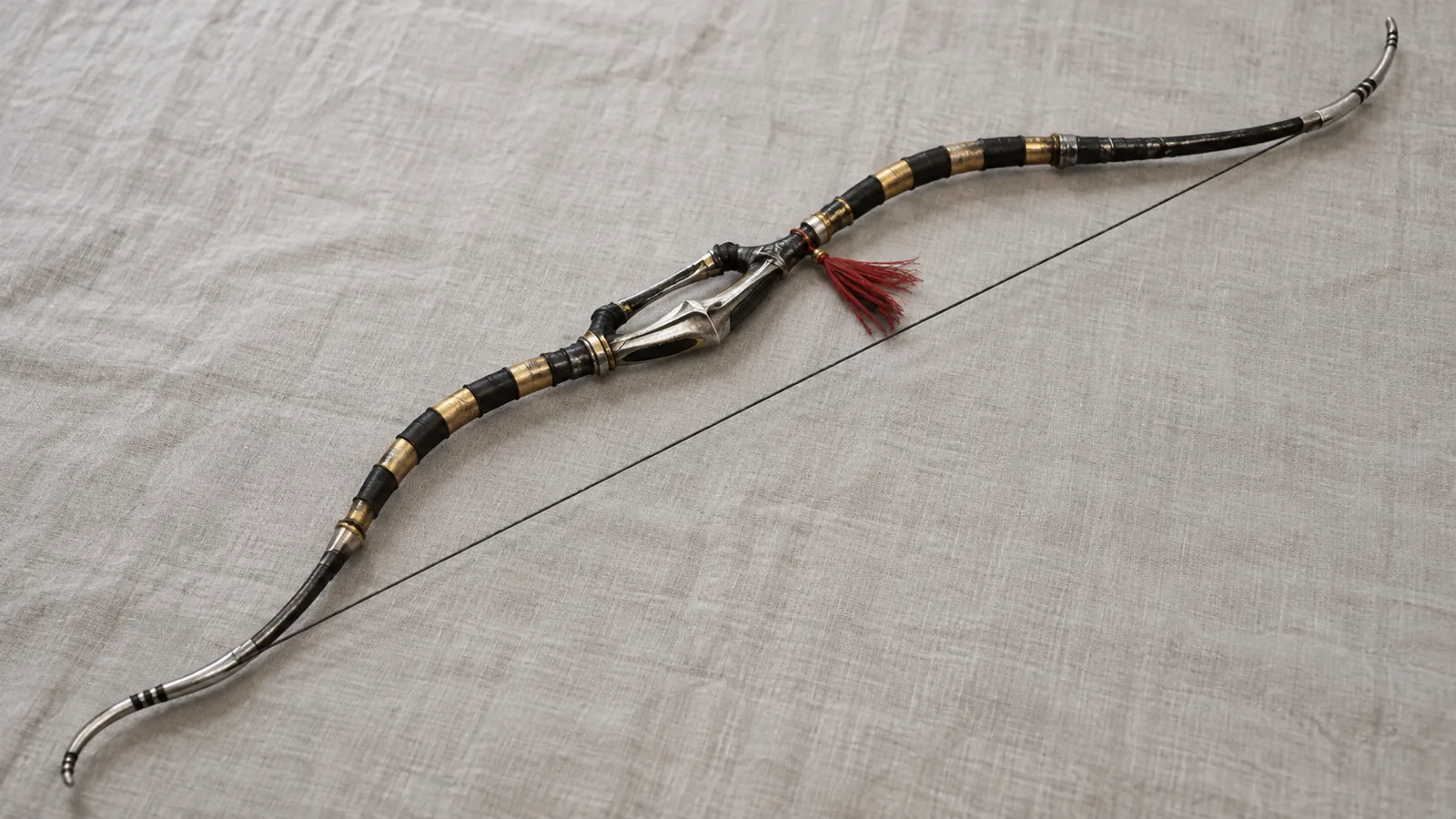
A bow gives an Archer a recognisable outline even when the face is too small to see. The curve extends beyond the character, changes the pose and catches the eye when someone turns. An equipment upgrade can therefore live in memory as a shape before it survives as a complete item name.
The official Archer weapon guide includes HoMee Gak Bow, Yellow Tiger Pattern Gak Bow, Red Tiger Pattern Gak Bow and earlier YeonGak names. It lists HoMee Gak at grade 37. The new photographs use its own official inventory portrait; a neighbouring weapon is not substituted simply because it makes a larger or more dramatic prop. [1]
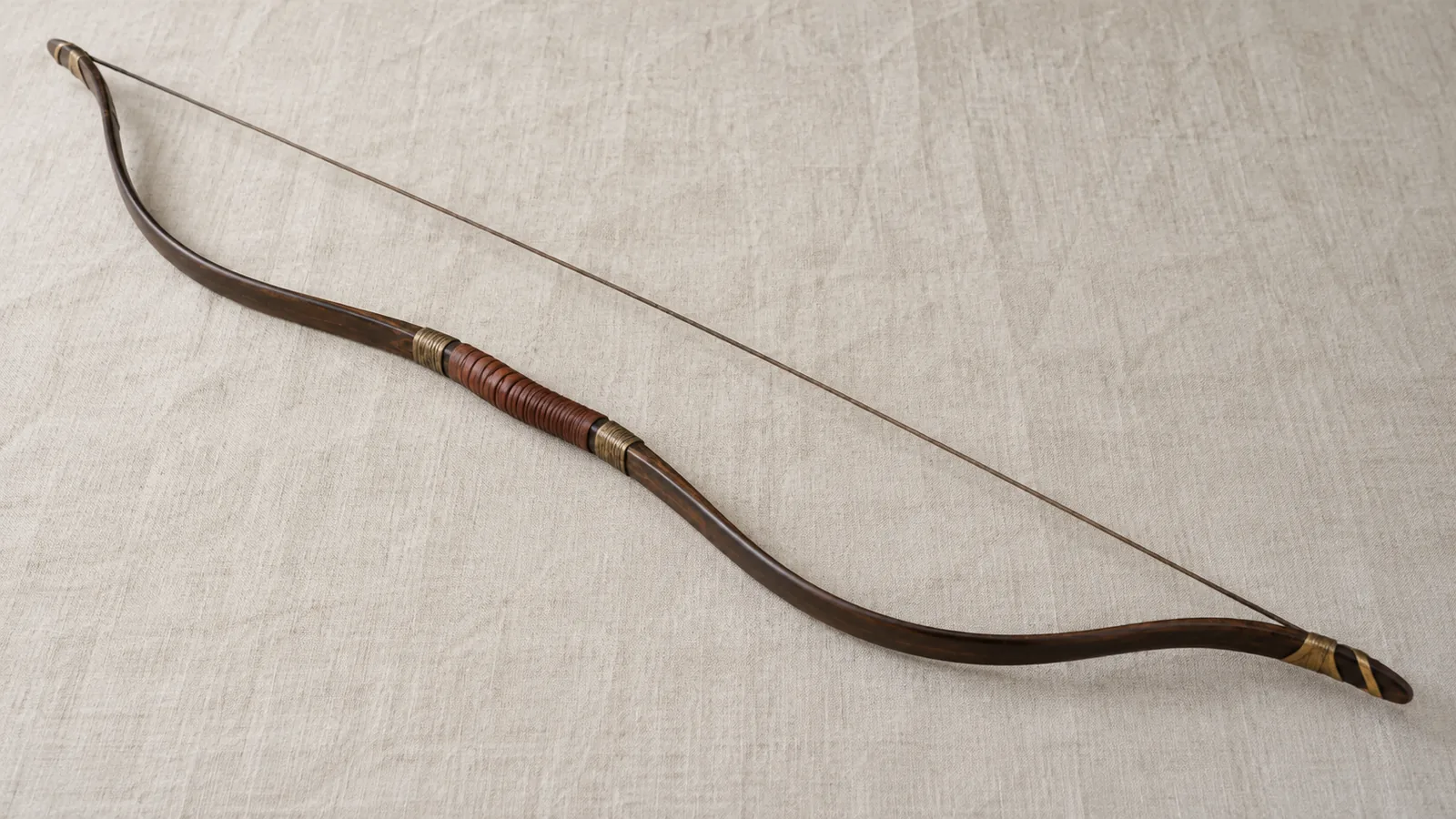
Gak invites comparison with Korean gakgung, 각궁 / 角弓, the horn bow. This is a cultural and linguistic reading. We have not verified the original Korean spelling behind every English item name or found a developer account proving the exact source of each design.
The bow is a combination of materials
The Korea Heritage Agency’s film on gungsijang follows bowyer Kim Yoon-kyung making a traditional Korean bow. Its documented sequence includes bending bamboo, preparing mulberry wood, combining the frame, applying water-buffalo horn and adding ox sinew before balancing the bow. The bow’s curve emerges from a patient assembly of different materials, rather than the carving of one impressive object. [2]
The Academy-hosted Sillok Dictionary likewise describes gakgung as a compact traditional bow using horn, wood, sinew, glue and other materials, made by specialist craftsmen. The historical construction is an explanation of a craft. It does not prove that the shiny limbs of a fantasy weapon were intended to represent the same materials or that its game statistics reproduce historical performance. [3]
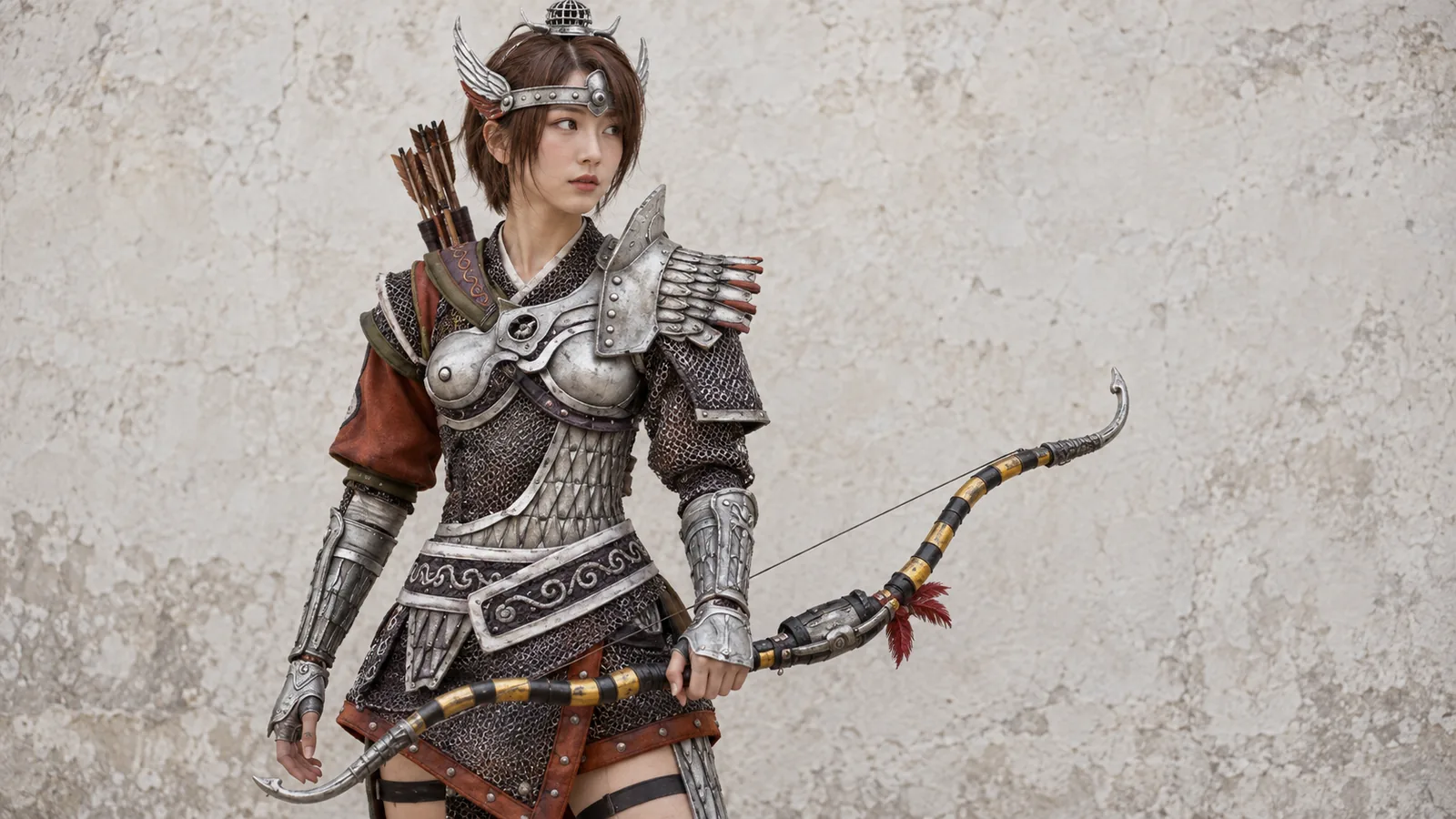
The Archer portrait retains the game’s silver, dark and gold details. We have not stripped those away to turn the weapon into a museum reconstruction. Recognising a historical word and preserving the fantasy object are compatible when each claim is kept clear.
Gungsijang names a skill and its makers
The Academy-hosted heritage interpretation explains gungsijang as both the art of making bows and arrows and the artisans who practise it. It identifies Yecheon as an important bow-making centre and describes a locally transmitted craft reaching back through families into the early twentieth century. Those are documented traditions of making and teaching, not a single lost recipe. [4]
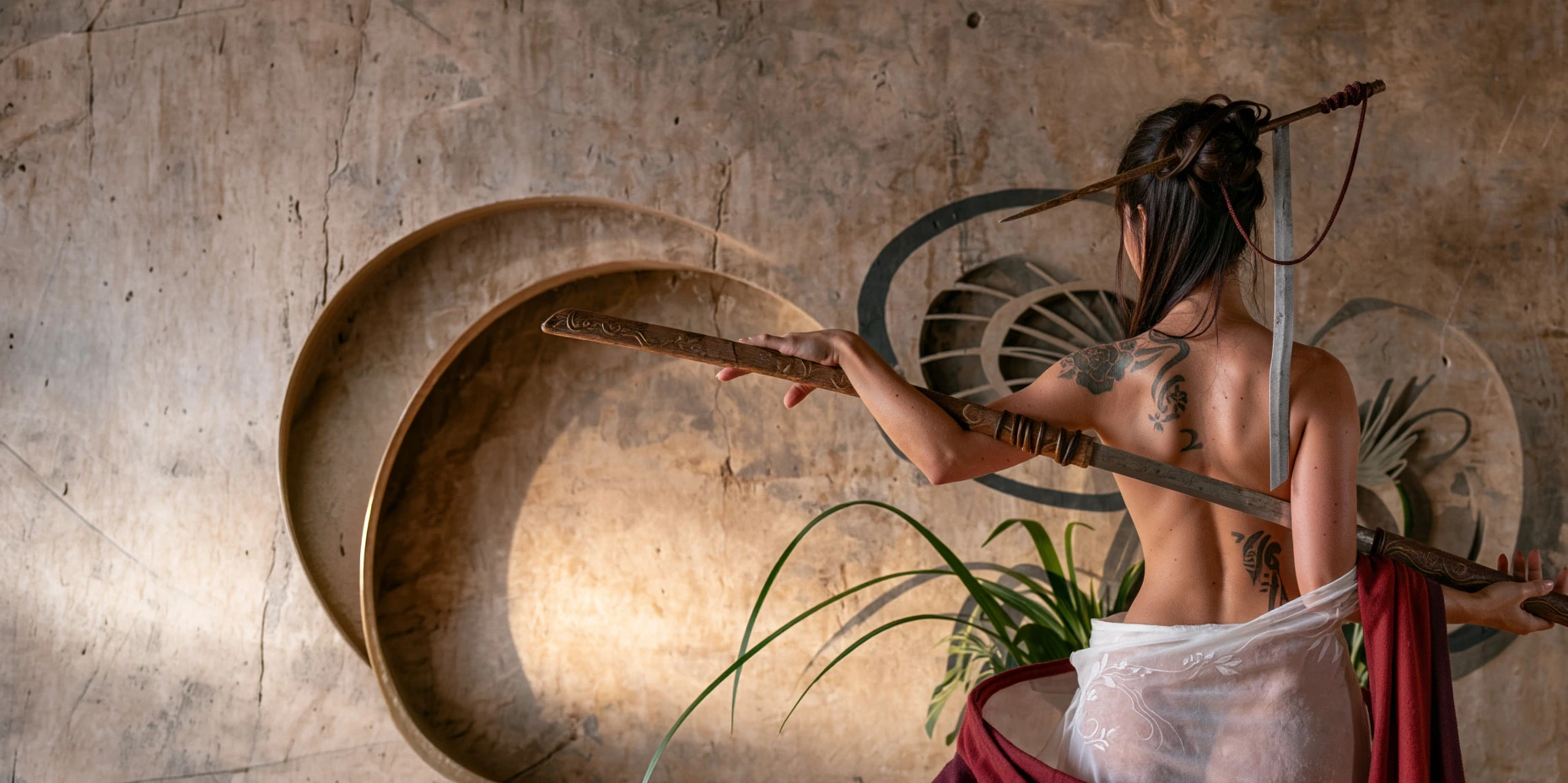
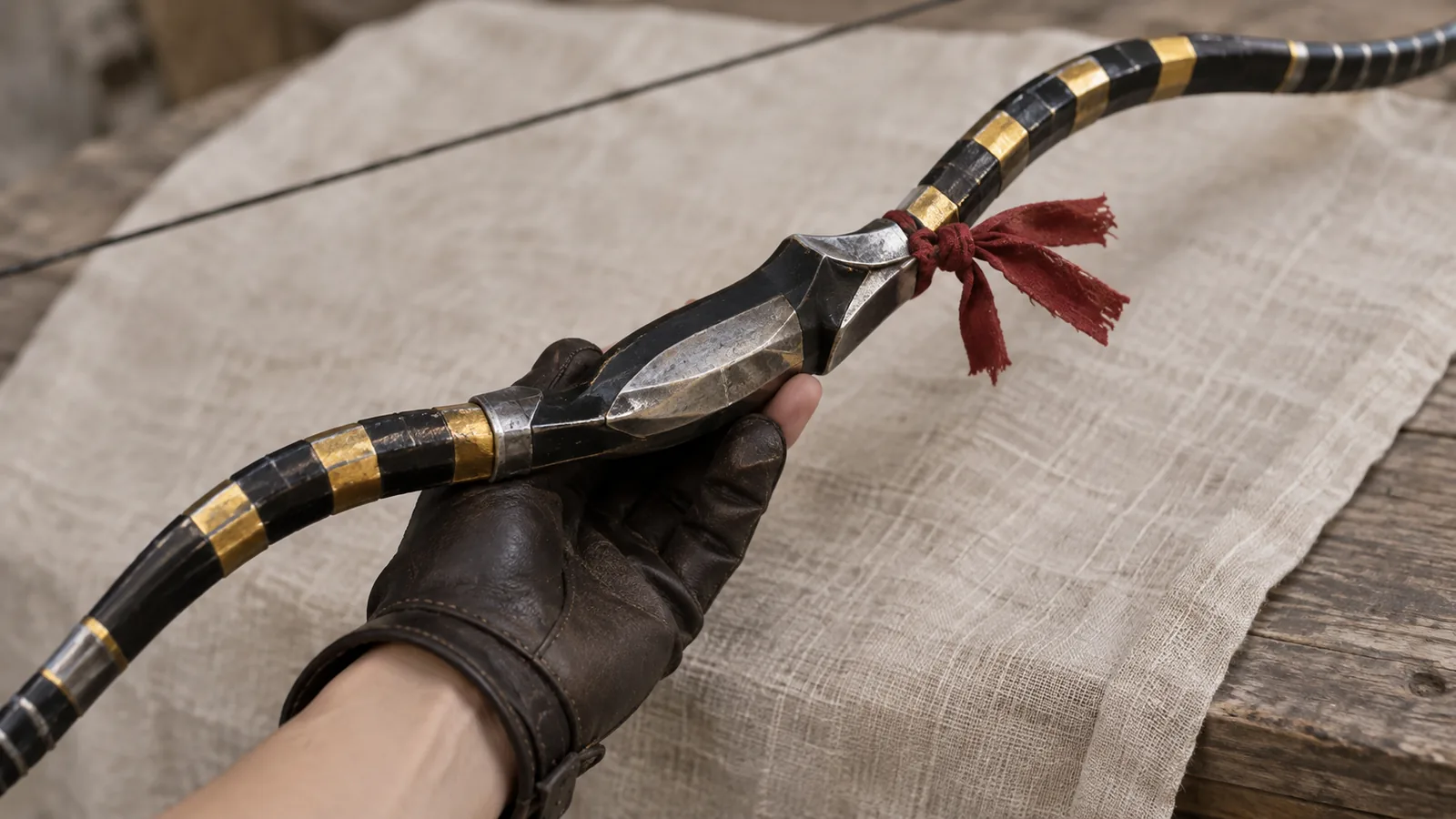
That offers another way to look at the equipment in an inventory. Instead of imagining only the person who aims it, consider the hands that would have shaped, joined, wrapped and balanced it if it were a physical thing. Our close photograph gives the grip and small red tassel attention. Its surfaces remain an artistic interpretation of the icon.
A game gives the player a completed weapon. Craft history restores a sense of time before that completion: pieces prepared separately, a join that must hold, and an object that has to work as a whole. We can appreciate that difference without assigning an undocumented historical workshop to a named game bow.
The tiger may be a pattern in the horn
There is a particularly suggestive comparison in the Academy of Korean Studies’ account of a bow associated with King Gojong. The entry discusses the name homi, tiger tail, in relation to pale markings in black horn resembling a tiger’s tail. It records the object’s fine inscriptions and describes the association with Gojong through the account’s evidence and oral tradition. [5]
HoMee and the game’s tiger-pattern names make that a worthwhile lead. They do not, by themselves, establish that KalOnline copied Gojong’s bow. A matching original Korean item name or documented design source would be needed to move from a suggestive resemblance to an identified derivation.
It is also a reason to resist an obvious visual shortcut. A tiger-related name need not demand a sculpted tiger head, giant claws or bright stripes covering the whole weapon. The source icon should decide what appears in the game-inspired photograph.
Keep the neighbouring bows distinct
HoMee Gak’s small official portrait shows silver tips, dark-and-gold sections and a red central accent. The separately named Yellow Tiger Pattern portrait is a different and much smaller visual source. The final photograph keeps that distinction: it follows the simpler visible silhouette instead of borrowing all the details of HoMee and changing the label.
Small icons impose real limits. They can support an overall curve, a colour relationship or a prominent ornament. They cannot establish every scratch, strand of wrapping or internal material layer. A convincing real-life adaptation makes those surfaces plausible while being honest that the details are new.
None of these photographs shows a drawn combat shot. Holding the bow at rest lets the outline and grip remain visible and avoids treating a decorative interpretation as a demonstration of historical shooting technique.
The curve and the person who carried it
For an old Archer player, the important memory may still be the trade that made the weapon possible, or how long the previous bow stayed in the inventory afterward. The craft behind gakgung does not replace that story. It gives the familiar name another depth when you encounter it again.
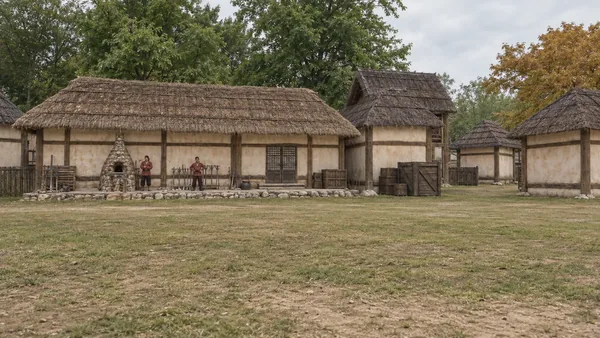
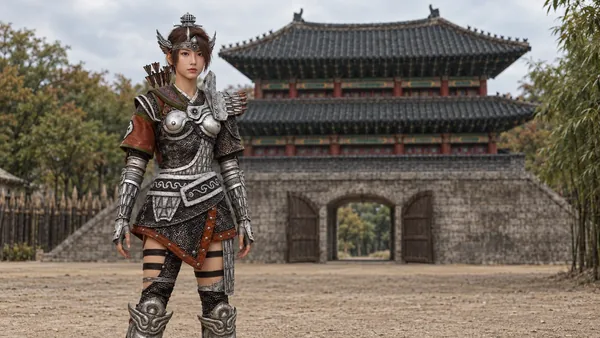
All four images are AI-generated photographic interpretations of game equipment. The female Archer wears the separately referenced G42 DooSukLinGap outfit. Neither her appearance nor her equipment records the historical inventory of a particular archived player. The linked heritage sources describe the real craft in their own right.
If you recognise a different version of the bow, share the item name and an old screenshot if one survives. Keeping the blade, bow or armour variant correctly identified is part of preserving the memory, even when the picture itself is newly imagined.
Sources & image credits
Research checked on 16 October 2026. Cultural scholarship, a dated player guide and current game records are identified separately. Photographic scenes are new AI interpretations of game references. Museum objects can be viewed through the collection links; their photographs are not reproduced here.
- Archer weapons · official KalOnline guideINIXSOFT / KalOnlineHoMee Gak and Yellow Tiger Pattern Gak item portraits were private design references. Current names/grades do not establish all historical introduction dates.
- Gungsijang: Bow and Arrow MakingKorea Heritage Agency · National Heritage Channel · 2024-12-07The craft sequence is documented by this film. It is not the recipe or production history of a KalOnline item.
- Gakgung (각궁 / 角弓)Sillok Dictionary · Academy of Korean Studies
- Gungsijang and the bow-making tradition in YecheonAcademy of Korean Studies hosted heritage interpretationThe English interpretation describes the position as of 2022; current numbers of recognised masters are not asserted.
- Gakgung: the bow associated with King Gojong and its homi markingLee Gang-chil · Encyclopedia of Korean Culture, Academy of Korean Studies · 2026-06-16The entry discusses an oral-tradition association and the tiger-tail horn marking. A direct KalOnline naming derivation remains unverified.
- Archer armour · official KalOnline guideINIXSOFT / KalOnlineCurrent guide checked on 16 October 2026 for item names and grades; current combat statistics do not establish the 2006 balance. Native game renders were private design references for new artwork.