
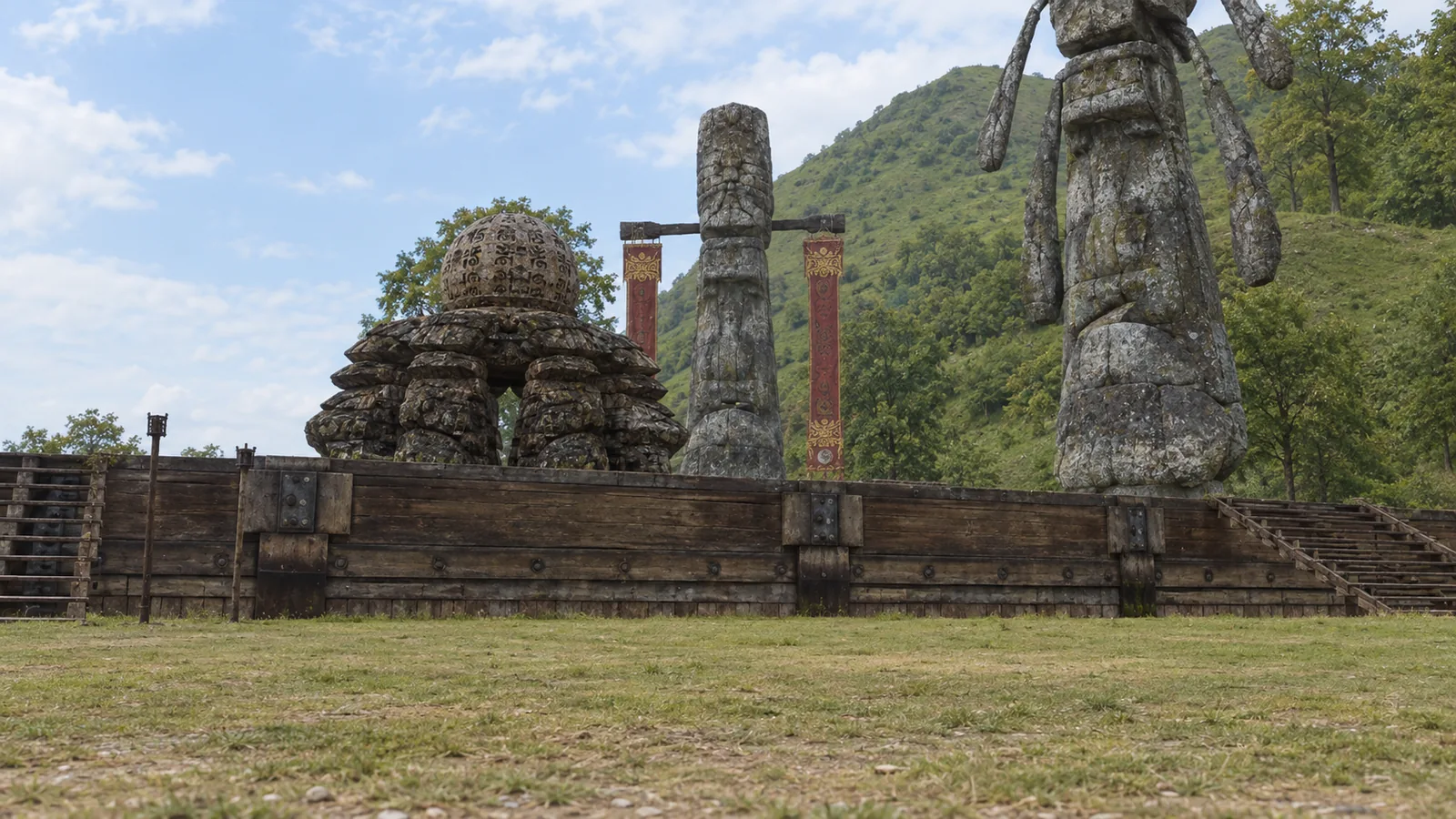
Coming back was part of playing
A hunting route has a return journey. You come through the same entrance carrying a little more experience, an item to inspect or another question. The town provides the pause in which those things acquire meaning. A weapon seen in somebody else’s hands becomes a goal; an unfamiliar player name becomes one you recognise.
It would be easy to rebuild that memory as a perfectly organised market scene. The surviving sources offer smaller, more useful details. They show players making choices about time and equipment, asking questions and correcting one another. A world can become familiar through those repeated exchanges without every evening producing a spectacular event.
One computer, two possible evenings
In a Hall of Fame interview published on 29 May 2007, the Bango player ChezyChez described the difficulty of choosing between running a shop and hunting with one computer. The record identifies an Expert Archer associated with GuardsOfLife. The practical constraint puts a human schedule behind the apparently motionless trading character. [1]
A character waiting in town was therefore not necessarily doing nothing. Selling could occupy the time that might otherwise have gone into a party. This is one player’s account, rather than a measured description of every server economy, but it helps explain why the spaces between hunts deserve a place in the story.
The guide beside the game
On 16 January 2005, Tyrande posted a second-job guide on KalHQ, explaining quest steps and Korean names. A later reply by punchbag asked about an NPC who would not talk. Elsewhere in the recovered guide discussions, ccy and KBryant08 challenged reward or skill-point information. The knowledge was being tested in public. [2] [3] [4] [5]
A guide could change what happened during the next login, but it was not an infallible instruction sheet. Questions and corrections are part of its value as a historical source. They show the work of learning together. They do not establish that every old instruction or reward still matches the current Kal2006 server.
A town made of repeated encounters
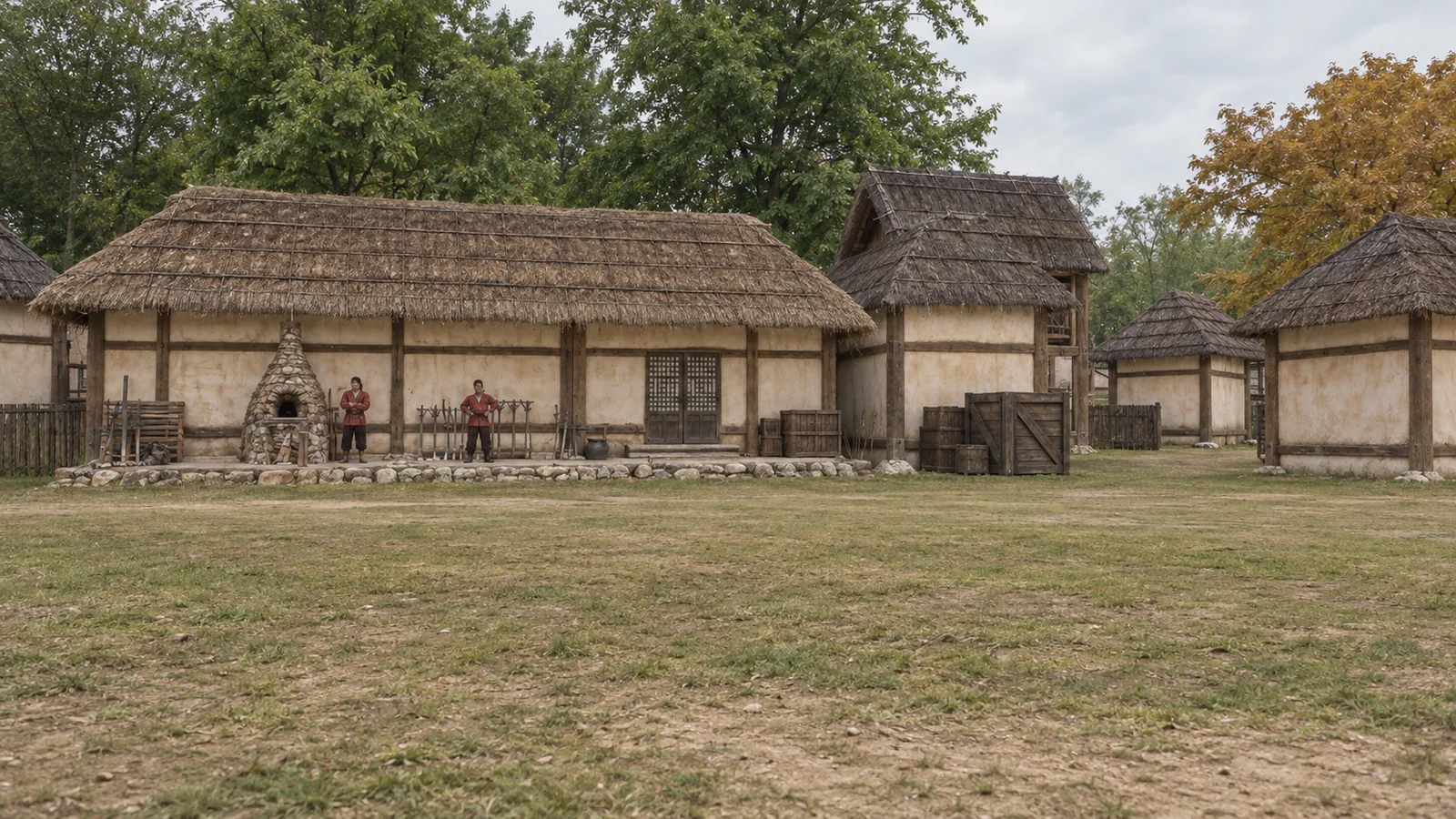
Seen this way, the village is more than the place where a character begins. It is where progress becomes a conversation: what to buy, where to go, which step was missed. Our village pictures are modern photographic interpretations of game references, not recovered photographs of a 2005 marketplace.
The people in those exchanges will lead us into the next part. Before a guild appears as a line in a ranking table, somebody has to join it, help organise it or decide to stay. Tell us which shop area or NPC you remember returning to, and keep the place you recall separate from a place you recognise in newly made artwork.
Sources and dates
Publication dates below belong to the original records. This article was written in October 2026. Interviews and forum posts are attributed personal accounts; the connecting narrative is editorial interpretation.
- ChezyChez: 2007-05-29
This is an attributed source statement. Publication date, event date and archive capture date are distinct; personal accounts are not independently verified event logs.
- Tyrande: 2005-01-16
- punchbag: 2005-02-04
This is an attributed source statement. Publication date, event date and archive capture date are distinct; personal accounts are not independently verified event logs.
- ccy: 2006-04-22
This is an attributed source statement. Publication date, event date and archive capture date are distinct; personal accounts are not independently verified event logs.
- KBryant08: 2006-05-17
This is an attributed source statement. Publication date, event date and archive capture date are distinct; personal accounts are not independently verified event logs.
Illustrations are identified in image metadata. Newly made photographic scenes are AI-assisted interpretations of game references; they are not period photographs or proof of a named player’s face or inventory. The Xca portrait and period courtyard image are existing archived screenshots, not modern reconstructions.